When Children Grieve: How to Best Support Them Through Their Grief


When Children Grieve: How to Best Support Them Through Their Grief
When a child loses someone they love, the experience can feel confusing and overwhelming—for the child and for the adults who care for them. Children grieve differently from adults, and their expressions of loss can shift quickly from tears to play, from silence to anger. As an adult, it can be hard to know what to do or say. Here’s how you can help a grieving child navigate their loss with understanding and compassion.
Children Grieve in Moments
A child’s grief rarely looks constant. While adults may feel consumed by sadness for long stretches, children often grieve in short bursts. They might cry one moment and play the next. This doesn’t mean they’ve forgotten the person who died—it’s their mind’s way of protecting them from being overwhelmed.
It’s important to accept this rhythm. Allow the child to play, laugh, and be a kid, even in the midst of grief. Play is one of the ways children process emotions and take breaks from what feels too heavy.
Speak Honestly—But at Their Level
Many adults want to protect children from pain, but silence or vague explanations can create more confusion than comfort. Children sense when something is wrong, and if they don’t get clear answers, they may fill in the blanks with their own, often scarier, ideas.
Be honest about what happened, but use words the child can understand. Avoid euphemisms like “passed away” or “went to sleep,” which can cause fear or misunderstanding. Instead, say that the person died, and explain what that means—that their body stopped working and they can’t come back.
Encourage questions, even if they come up repeatedly. Answer as simply and truthfully as you can, and don’t be afraid to say, “I don’t know,” when you don’t have an answer.
Make Room for All Feelings
Grief can show up in many forms: sadness, anger, guilt, confusion, or even relief. Children might act out, have trouble concentrating, or seem unusually quiet. All of these are normal reactions.
Your most important role is to show that every feeling is okay. You might say, “It’s okay to be angry. It’s okay to miss them.” When children see that their emotions are accepted, they learn that grief isn’t something to hide.
Keep Routines and Provide Stability
Even when everything feels different, children need their daily routines—mealtimes, bedtime, school—to continue as normally as possible. Familiar structure gives them a sense of safety in a world that suddenly feels uncertain.
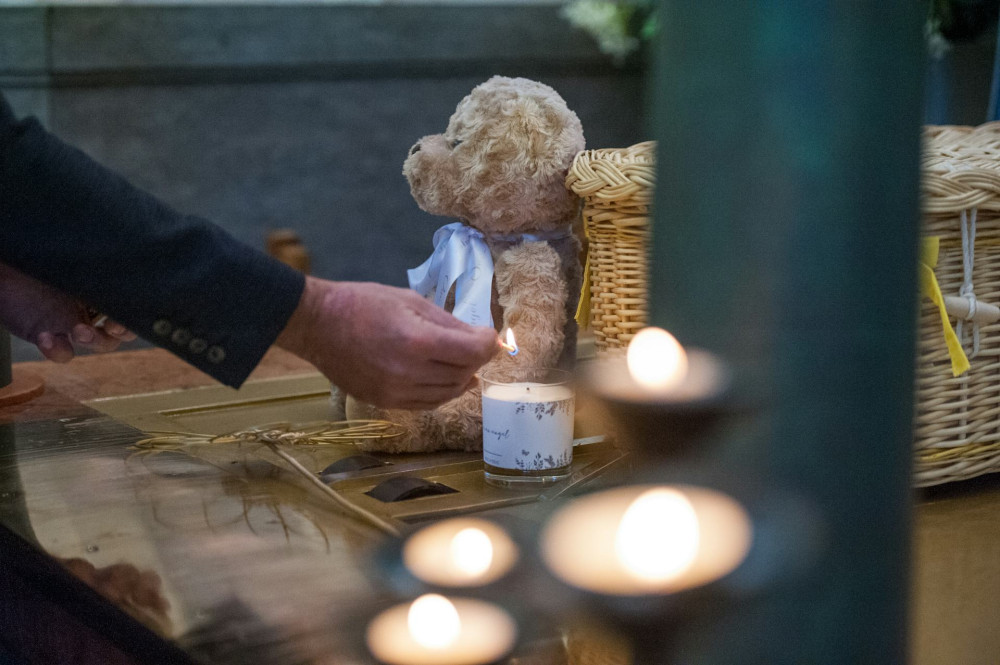
That doesn’t mean ignoring the grief. It means helping the child find balance. Small rituals can also bring comfort: lighting a candle, looking at photos, or talking about the person who died before bedtime. These moments help children remember and make sense of what’s happened.
Involve the Child in Saying Goodbye
Parents often wonder whether children should attend funerals or memorials. It depends on the child’s age and temperament, but being part of the farewell can be an important step in understanding death and finding closure.
Prepare the child ahead of time. Explain what will happen, who will be there, and what people might do—cry, pray, share stories. Give the child a choice about participating and a way to contribute, such as drawing a picture, placing a flower, or saying a few words. This helps them feel included and gives them a sense of control in a situation that can otherwise feel powerless.
When Grief Lasts Longer
Most children gradually find ways to live with their loss, but some may need extra support. If a child remains withdrawn, loses interest in play or friends, or struggles with sleep or concentration for an extended period, it may be a sign that the grief has become too heavy to manage alone.
In these cases, consider reaching out for help. Pediatricians, school counselors, or child therapists can offer guidance. Many communities and organizations across the U.S.—such as local hospice programs, grief centers, and nonprofits like the Dougy Center—offer grief support groups for children. Meeting others who have experienced similar losses can be deeply comforting.
Læs også:



Your Presence Matters Most
There’s no perfect way to support a grieving child. What matters most is your presence—your time, patience, and willingness to listen. You don’t need to have all the answers. Simply being there, showing that you can handle their sadness alongside them, makes a world of difference.
Grief changes over time, but it never disappears completely. It becomes part of a child’s story—and with your steady support, that story can hold not only loss, but also love, memory, and hope.
Læs også: